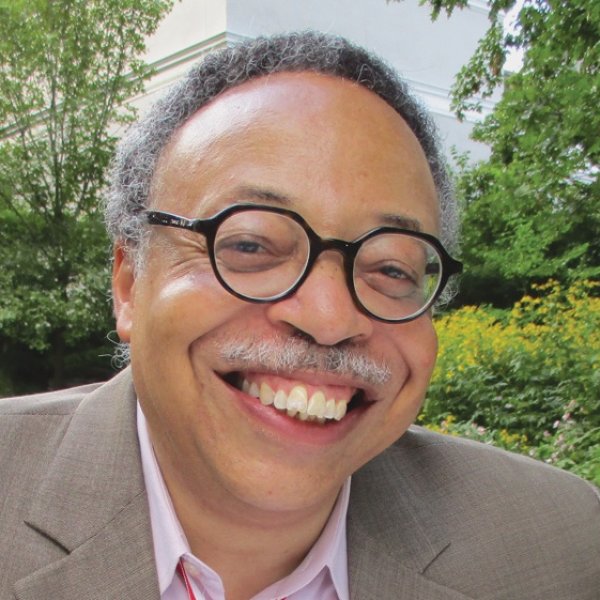
Where Beauty Survived

with George Elliott Clarke

Hosted by Wayne Grady

Podcast Memoir
Date
Admission
Free
Date
Friday
Sep , 2021
3
12:01pm
Eastern
Where Beauty Survived
George Elliott Clarke

In this memoir of growing up in Nova Scotia, the former parliamentary poet laureate paints vivid scenes of his early life: his family’s urban home, his parents’ split, his mother’s rural background. Underlying the story of his complicated family life is his unique Africadian mixed heritage, the stress of racism, and secrets that, when revealed, explain everything.

Cassandra Drudi

Don’t miss this conversation between acclaimed author, editor and translator, Wayne Grady and internationally-renowned poet, novelist, playwright, screenwriter, librettist and scholar, George Elliott Clarke, on his latest publication, Where Beauty Survived: An Africadian Memoir


As a boy, George Elliott Clarke knew that a great deal was expected from him and his two brothers. The descendants of a highly accomplished, Virginia-descended family on his father, Bill’s, side, George felt called to live up to the family name. In contrast, his mother, Gerry’s, family were warm, down-to-earth country folk. Such contradictions underlay much of his life and upbringing—Black and White, country and city, outstanding and ordinary, high and low. With vulnerability and humour George interrogates these dualities in Where Beauty Survived and shows us how they shaped him as a poet and thinker.


At the book’s heart is George’s turbulent relationship with his father, an autodidact who valued art, music and books but worked an unfulfilling railway job. George recalls Bill using a bowl of white sugar and a bowl of brown sugar to explain racial difference to him and his brothers when they were very small. But Bill also acted out destructive frustrations, assaulting George’s mother and sometimes George and his brothers, too. 


Books are available from our friends at Perfect Books.


The Ottawa International Writers Festival is supported by generous individuals like you. Please consider subscribing to our newsletter and making a donation to support our programming and children’s literacy initiatives.

The Authors

George Elliott Clarke

George Elliott Clarke

George Elliott Clarke was the 4th Poet Laureate of Toronto (2012-15) and the 7th Parliamentary/ Canadian Poet Laureate (2016-17), George Elliott Clarke is a revered artist in song, drama, fiction, screenplay, essays, and poetry. His publications number titles in Braille, Chinese, Italian, and Romanian.Born in Windsor, Nova Scotia, in 1960, Clarke is a matrilineal descendant of African-Americans and Cherokee (peoples transported to Nova Scotia during the War of 1812) and a patrilineal descendant of an African-American great-grandfather and a Jamaican grandfather. He be Afro-Métis.    Educated at the University of Waterloo, Dalhousie University, and Queen’s University, Clarke is a pioneering scholar of African-Canadian literature. The inaugural E. J. Pratt Professor of Canadian Literature at the University of Toronto, Clarke has taught at Duke, McGill, the University of British Columbia, and Harvard.    He holds eight honorary doctorates, plus appointments to the Order of Nova Scotia and the Order of Canada at the rank of Officer. Also he is a Fellow of the Royal Canadian Geographical Society.    His recognitions include the Bellagio Center Fellowship, the Pierre Elliott Trudeau Fellows Prize, the Governor-General’s Award for Poetry, the National Magazine Gold Award for Poetry, the Premiul Poesis (Romania), the Dartmouth Book Award for Fiction, the Eric Hoffer Book Award for Poetry (US), International Fellow Poet—Encyclopedic Poetry School Trophy (China), and the Dr. Martin Luther King Jr. Achievement Award. In 2021, he was named a Life Member of the League of Canadian Poets.   Clarke’s work is the subject of Africadian Atlantic: Essays on George Elliott Clarke (2012), edited by Joseph Pivato, as well as a substantial entry in Contemporary Literary Criticism, volume 459 (2020), also overseen by Professor Pivato.

Read more ›